😴 Tired of hitting snooze five times but still feeling like you’ve been hit by a truck? You’re not alone. Imagine this: it’s 6:30 AM, your alarm is blaring, and instead of springing out of bed energized for the day, you’re wrestling with your covers, dreading the morning ahead. Your eyes feel heavy, your brain is foggy, and the thought of coffee before 9 AM seems like the only solution. If this sounds familiar, you’re part of a massive club—according to the CDC, more than one-third of adults in the U.S. don’t get enough sleep, with 14.5% struggling to fall asleep and 17.8% having trouble staying asleep. And it’s not just about feeling tired; poor sleep impacts your productivity, mood, immune system, and long-term health. Chronic sleep deprivation increases your risk of heart disease, diabetes, depression, and even Alzheimer’s.
But here’s the good news: you don’t need expensive gadgets, fancy supplements, or complicated routines to transform your sleep. The best sleep hacks are often the simplest—and completely free. In this article, I’ll share eight science-backed sleep hacks that have helped thousands of people just like you wake up refreshed without spending a dime. These aren’t quick fixes but sustainable habits that work with your body’s natural rhythms. No apps to buy, no subscriptions to sign up for—just practical, actionable strategies you can start tonight.
Ready to stop dragging through your days and start greeting mornings with genuine energy? Let’s dive into the eight free sleep hacks that will help you wake up refreshed, boost your morning energy, and transform your overall well-being. From optimizing your bedtime routine to harnessing the power of natural light, these strategies target the root causes of poor sleep. Say goodbye to groggy mornings and hello to waking up feeling truly rested—every single day.
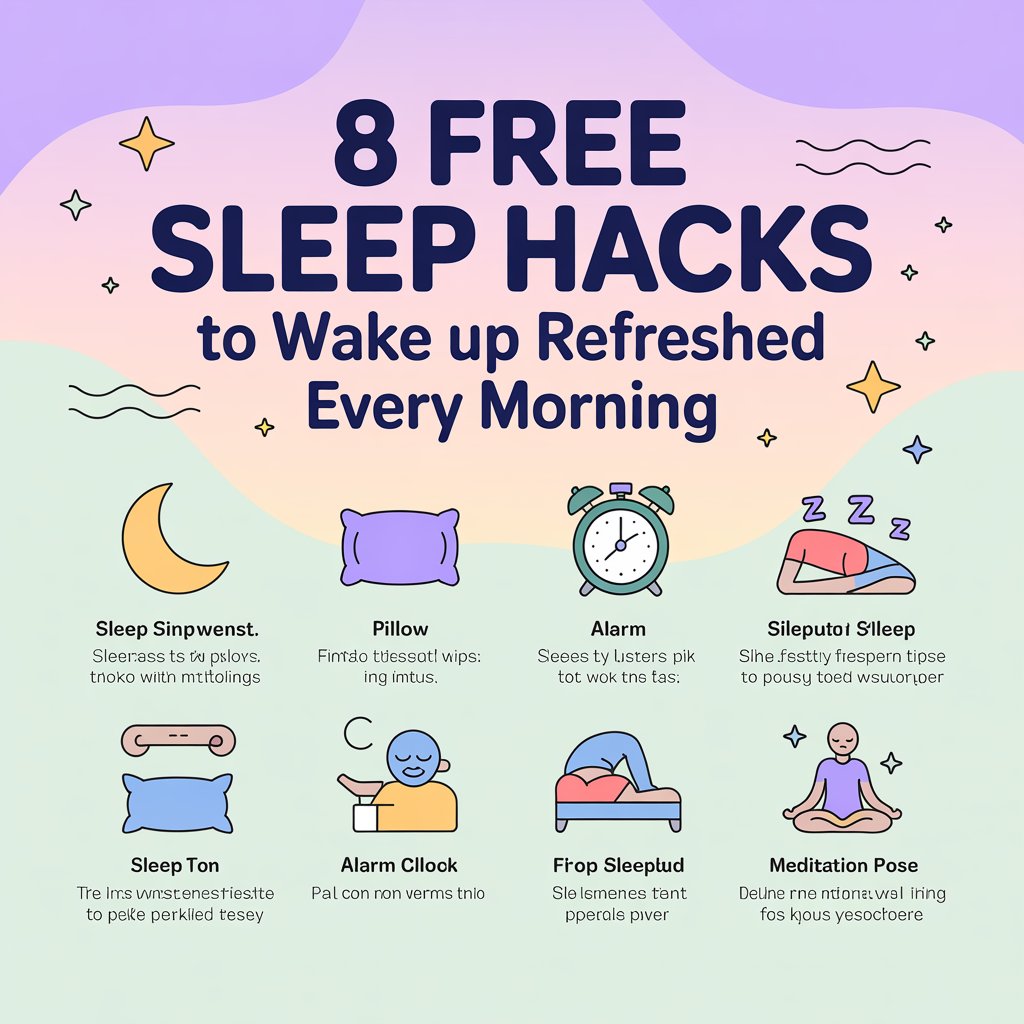
Why These Sleep Hacks Work: The Science of Restorative Sleep
To understand why these sleep hacks deliver real results, let’s peek under the hood at what happens while you sleep. Your night isn’t just one long period of unconsciousness—it’s a carefully orchestrated dance through different sleep stages, primarily REM (rapid eye movement) and non-REM sleep. During non-REM sleep, especially in the deep slow-wave stage, your body repairs tissues, builds bone and muscle, and strengthens your immune system. REM sleep, which increases in the second half of the night, is crucial for memory consolidation and emotional processing.
Your circadian rhythm—the 24-hour internal clock governing sleep-wake cycles—relies on external cues like light and temperature to function optimally. When these cues align with your sleep habits, your body releases melatonin (the sleep hormone) at the right time and manages cortisol (the stress hormone) effectively. According to Harvard Health research, “Sleep is one of the body’s most impactful processes,” and disruptions to this delicate system can have serious consequences for both physical and mental health.
The beauty of these sleep hacks is that they work with your biology rather than against it. By making small, consistent adjustments to your environment and habits, you signal to your body when it’s time to wind down and when it’s time to wake up. This synchronization allows you to move through complete sleep cycles, spending adequate time in each critical stage. The result? You’ll naturally wake up refreshed without needing multiple cups of coffee to feel human. Let’s explore the specific strategies that make this possible.
Sleep Hack #1: Free Consistent Sleep Schedule for Morning Refresh
Sticking to a consistent bedtime and wake-up time—even on weekends—is arguably the most powerful free sleep hack available. When you maintain regular sleep hours, you strengthen your circadian rhythm, the internal body clock that regulates when you feel sleepy and awake. Dr. Michael Grandner, Sleep Expert and Professor of Neuroscience, explains: “Waking refreshed starts with sleep quality—not just quantity. Consistency is key to supporting your body’s internal rhythm.” Research from the National Sleep Foundation suggests that while weekend catch-up sleep might help after a week of insufficient rest, inconsistent sleep patterns ultimately disrupt your body’s natural timing.
Here’s how to implement this game-changing sleep hack:
- Set fixed sleeping and waking times that allow for 7-9 hours of sleep, even on weekends
- Use an alarm clock for both bedtime and wake-up time (yes, a bedtime alarm!)
- Gradually adjust your schedule by 15-minute increments if your current routine is wildly inconsistent
Sarah, a 32-year-old marketing manager from Toronto, transformed her sleep by committing to waking at 6:30 AM every single day—even on Sundays. Within three weeks, she noticed she was falling asleep faster and waking up without that heavy, groggy feeling. “I used to sleep until 10 on weekends, thinking it was helping, but I’d feel worse,” she shares. “Now I wake up naturally before my alarm most days.”
Pro tip: Don’t obsess over perfection—aim for consistency within a 30-minute window. The biggest mistake people make is sleeping in dramatically on weekends, which creates “social jet lag” that undermines your entire week’s progress.
Visual suggestion: Embed an infographic showing the circadian rhythm cycle and optimal sleep timing.
Sleep Hack #2: Screen-Free Wind-Down Ritual for Better Sleep Routine
Creating a dedicated wind-down ritual one hour before bed signals to your brain that it’s time to shift from “go mode” to “rest mode.” This sleep hack focuses on eliminating blue light exposure from screens, which suppresses melatonin production by up to 50% according to Harvard research. The blue light emitted by phones, tablets, and computers tricks your brain into thinking it’s still daytime, delaying your natural sleep onset.
Here’s your step-by-step screen-free wind-down routine:
- Power down all screens 60 minutes before bed (use a physical alarm clock instead of your phone)
- Dim the lights in your home to mimic natural sunset conditions
- Engage in relaxing activities like reading a physical book, light stretching, or listening to calming music
Mark, a software developer from Austin, struggled with insomnia for years until he implemented a strict screen curfew. “I used to work until midnight on my laptop, then wonder why I couldn’t sleep,” he admits. After just ten days of his new ritual—which includes brewing herbal tea and reading fiction—Mark now falls asleep within 20 minutes and wakes up feeling genuinely refreshed.
Pro tip: If you absolutely must use a device, enable “night mode” settings and keep brightness at minimum, but understand this is a compromise—not a solution. The most effective approach is complete screen elimination during your wind-down period.
Visual suggestion: Create a before-and-after graphic showing cortisol and melatonin levels with and without screen time before bed.
Sleep Hack #3: Optimize Your Bedroom for Deep Sleep Tips
Transforming your bedroom into a sleep sanctuary requires zero financial investment but delivers massive returns in sleep quality. The ideal sleep environment is cool (between 60-67°F or 15-19°C), dark, and quiet—conditions that support your body’s natural temperature drop during sleep. According to sleep researchers, even small amounts of light can disrupt melatonin production and fragment sleep cycles, preventing you from reaching the deep sleep stages essential for feeling truly rested.
Here’s how to optimize your space without spending money:
- Block light leaks using towels under doors, aluminum foil over bright electronics, or a sleep mask
- Reduce noise with earplugs or by creating white noise (a fan works great)
- Cool your room by opening windows, using lighter bedding, or taking a cool shower before bed
Jessica from Seattle turned her sleep around by focusing on her environment. “I live near a busy street, so I started using my old fan for white noise and hung blackout curtains I already owned,” she explains. “The difference was immediate—I stopped waking up at every car that passed.”
Pro tip: Keep your bedroom exclusively for sleep and intimacy—no working, eating, or watching TV in bed. This strengthens the mental association between your bed and sleep, making it easier to drift off.
Visual suggestion: Include a checklist of free bedroom optimization strategies with checkboxes.
Sleep Hack #4: Strategic Caffeine and Meal Timing for Morning Energy Boost
What you consume—and when—significantly impacts your ability to wake up refreshed. Caffeine has a half-life of 5-6 hours, meaning that afternoon coffee can still be affecting your sleep quality at bedtime. Similarly, heavy meals close to bedtime force your digestive system to work when it should be resting, potentially causing discomfort and fragmented sleep.
Follow these timing guidelines for optimal results:
- Cut off caffeine after 2 PM (sooner if you’re particularly sensitive)
- Finish dinner at least 3 hours before bed to allow for proper digestion
- Choose light evening snacks if needed (try bananas, almonds, or warm milk)
David, a 41-year-old teacher from Chicago, eliminated his 3 PM energy crash and improved his sleep by adjusting his caffeine timing. “I used to drink coffee until 4 PM thinking it helped me get through grading papers,” he says. “Now I switch to decaf after lunch, and I fall asleep faster while waking up with more natural energy.”
Pro tip: Stay hydrated throughout the day but reduce liquid intake in the two hours before bed to minimize nighttime bathroom trips that disrupt sleep continuity.
Visual suggestion: Create a timeline graphic showing optimal timing for meals, caffeine, and sleep.
Sleep Hack #5: Breathing Techniques for Natural Sleep Remedies
When racing thoughts keep you awake, simple breathing exercises provide an immediate, free solution. The 4-7-8 technique (inhale for 4 counts, hold for 7, exhale for 8) activates your parasympathetic nervous system, lowering heart rate and blood pressure to prepare your body for sleep. Progressive muscle relaxation—systematically tensing and releasing muscle groups—reduces physical tension that often accompanies stress-related insomnia.
Implement these breathing techniques tonight:
- Practice 4-7-8 breathing lying in bed: inhale quietly through your nose for 4 counts, hold for 7, exhale audibly through your mouth for 8
- Try progressive muscle relaxation starting with your toes and working upward
- Repeat for 4-5 cycles until you feel noticeably calmer
After months of struggling with insomnia following her divorce, Maria discovered breathing techniques that changed everything. “I’d lie awake for hours with anxiety,” she shares. “Now I do 4-7-8 breathing for just five minutes, and I’m usually asleep before I finish.”
Pro tip: Practice your breathing technique during the day first so it becomes familiar—trying something new when you’re already frustrated and sleep-deprived is less effective.
Visual suggestion: Embed a simple illustrated guide to the 4-7-8 breathing technique.
Sleep Hack #6: Morning Sunlight Exposure for Circadian Reset
Getting natural light exposure within 30 minutes of waking is one of the most powerful yet underutilized sleep hacks. Morning sunlight suppresses melatonin production (helping you feel alert) while resetting your circadian rhythm for the day ahead. Harvard Health Publishing notes that light exposure is “one of the body’s most impactful processes” for regulating sleep-wake cycles.
Maximize this free resource with these simple steps:
- Step outside within 30 minutes of waking—even on cloudy days (light intensity is still significantly higher than indoors)
- Enjoy your morning coffee or tea outside instead of at the kitchen table
- Take a short walk to double the benefits with gentle movement
James, a night-shift worker turned day job employee, used morning light to reset his sleep pattern. “I’d sleep until noon and feel terrible,” he explains. “Now I force myself outside at 7 AM with coffee, and within two weeks, my body naturally started waking earlier feeling more refreshed.”
Pro tip: Avoid wearing sunglasses during this morning exposure—the light needs to reach your retina to be most effective for circadian regulation.
Visual suggestion: Create an infographic showing how morning light affects melatonin and cortisol levels throughout the day.
Sleep Hack #7: Journaling for Mental Clarity Before Bed
A racing mind is one of the top reasons people struggle to fall asleep. Journaling before bed provides a mental “download” that clears cognitive clutter and reduces anxiety. Whether you’re processing worries or practicing gratitude, putting thoughts on paper prevents them from circling in your mind when you’re trying to sleep. Sleep experts at Yale School of Medicine note that this practice supports emotional processing and cognitive renewal during sleep.
Try these journaling approaches tonight:
- Worry dump: Write down everything on your mind with a plan to address it tomorrow
- Gratitude practice: List 3 things you’re grateful for that day
- Tomorrow’s preview: Briefly outline your next day to reduce bedtime anxiety
After years of lying awake with work worries, Lisa started a 5-minute journaling habit. “I used to rehearse tomorrow’s meetings in bed,” she says. “Now I write them down with action items, close the book, and my mind finally rests. I wake up refreshed and ready to tackle those same meetings!”
Pro tip: Keep it brief—5 minutes is plenty. The goal isn’t perfect writing but mental release. Use a dedicated notebook that stays by your bed to avoid screen temptation.
Visual suggestion: Include a photo of a simple journaling setup with pen and notebook.
Sleep Hack #8: Strategic Napping for Afternoon Energy Without Sleep Inertia
While naps can be refreshing, poorly timed or overly long naps sabotage your ability to wake up refreshed in the morning. The key is strategic napping: short enough to avoid sleep inertia (that groggy feeling after waking from deep sleep) and early enough not to interfere with nighttime sleep.
Master the art of the perfect power nap:
- Limit naps to 20 minutes maximum (this keeps you in lighter sleep stages)
- Nap before 3 PM to avoid interfering with nighttime sleep
- Set an alarm for exactly 20 minutes to prevent oversleeping
Tom, a busy father of two from Vancouver, transformed his afternoon slump with strategic napping. “I used to crash after lunch and take hour-long naps that left me feeling worse,” he explains. “Now I set a 20-minute timer at 2 PM, and I wake up alert without affecting my nighttime sleep.”
Pro tip: If you can’t fall asleep quickly, don’t force it—just close your eyes and rest quietly. The relaxation itself provides benefits without the risk of sleep inertia.
Visual suggestion: Create a graphic showing optimal nap timing and duration.
Bonus: Build Your Ultimate Free Sleep Routine
Combine these sleep hacks into a seamless daily flow that works with your natural rhythms. Start your day with 10 minutes of morning sunlight while enjoying your coffee (Hack #6), maintain consistent wake-up times even on weekends (Hack #1), and finish dinner by 7 PM if possible (Hack #4). In the evening, begin your screen-free wind-down at 9 PM (Hack #2), journal for 5 minutes (Hack #7), and practice breathing techniques as you drift off (Hack #5). Keep your bedroom cool and dark (Hack #3), and if you need a nap, make it a quick 20-minute recharge before 3 PM (Hack #8).
Imagine this sample routine:
- 6:30 AM: Wake up, step outside for sunlight
- 9:00 PM: Power down all screens
- 9:30 PM: Journal worries and gratitude
- 10:00 PM: Lights out with consistent bedtime
- 6:30 AM: Wake naturally feeling refreshed
Visual suggestion: Create a downloadable “Free Sleep Routine Checklist” that readers can print and track their progress.
Common Sleep Mistakes to Avoid
Don’t sabotage your progress with these common pitfalls:
- Weekend sleep marathons → Stick to consistent wake times within 1 hour of weekdays
- Late-night screen scrolling → Implement a hard screen cutoff 60 minutes before bed
- Using alcohol to fall asleep → It fragments sleep architecture despite initial drowsiness
- Checking the clock when awake → Creates performance anxiety about sleep
- Exercising too close to bedtime → Finish intense workouts at least 3 hours before sleep
Each mistake has a simple fix that aligns with our free sleep hacks. For example, if you struggle with clock-watching, turn your clock away from view and remind yourself that rest is still beneficial even if you’re not asleep.
Conclusion
Let’s recap the eight free sleep hacks that will transform how you wake up refreshed every morning:
- Stick to a consistent sleep schedule, even on weekends
- Create a screen-free wind-down ritual 60 minutes before bed
- Optimize your bedroom for cool, dark, quiet sleep
- Avoid caffeine after 2 PM and heavy meals close to bedtime
- Practice 4-7-8 breathing or progressive muscle relaxation
- Get morning sunlight exposure within 30 minutes of waking
- Journal worries or gratitude before bed to clear your mind
- Limit naps to 20 minutes early in the afternoon
These aren’t quick fixes but sustainable habits that work with your body’s natural rhythms. Sarah from Toronto went from hitting snooze five times to waking up naturally feeling energized. Mark the software developer stopped his midnight laptop sessions and now falls asleep within 20 minutes. James reset his circadian rhythm with morning light and finally feels alert throughout the day.
The best part? These sleep hacks cost absolutely nothing but deliver incredible returns on your health, productivity, and happiness. You don’t need special equipment or expensive subscriptions—just commitment to working with your biology rather than against it.
Ready to transform your mornings? Try just one hack tonight and notice the difference tomorrow. Which strategy resonates most with you? Share your experience in the comments below—we’d love to hear how these free sleep hacks work for you! And if you’re serious about improving your sleep, subscribe for more science-backed wellness tips delivered straight to your inbox. Your journey to waking up refreshed starts tonight. 😴
Frequently Asked Questions
How long until sleep hacks work?
Most people notice improvements within 3-7 days of consistent implementation, though full circadian rhythm adjustment can take 2-4 weeks. Stick with it—even small changes compound over time.
Can these sleep hacks help with insomnia?
Yes! Many of these strategies are foundational components of Cognitive Behavioral Therapy for Insomnia (CBT-I), the gold standard non-pharmaceutical treatment for chronic insomnia.
What’s the best hack for immediate results?
Morning sunlight exposure (Hack #6) often delivers the quickest noticeable improvements, as it powerfully resets your circadian rhythm from the first day.
How do I stick with these sleep hacks when life gets busy?
Start with just one hack that feels most doable, master it, then add another. Consistency with fewer habits beats sporadic attempts at all eight.
Do these sleep hacks work for shift workers?
Absolutely—adapt the timing to your schedule. The principles remain the same: consistent sleep-wake times (for your schedule), darkness during sleep hours, and strategic light exposure when you need alertness.