You already know sleep matters. But do you know what’s actually happening inside your brain at 2 a.m.? Deep inside your sleeping mind, neurons are firing in rhythmic waves, hormones are surging, and memories formed during the day are being quietly filed away for good. This is the neuroscience of sleep — and it’s far more fascinating than most people realize.
Americans are getting less deep, restorative sleep than ever before. The CDC estimates that more than one-third of U.S. adults are sleep-deprived, and the cost goes well beyond feeling groggy. Poor sleep quality is linked to impaired memory, weakened immunity, weight gain, mood disorders, and a significantly higher risk of chronic disease.
But here’s the encouraging part: sleep quality is highly trainable. By understanding how your brain orchestrates sleep, you can make targeted changes that dramatically improve your deep sleep stages — starting tonight.
This guide covers the science of how sleep works, why deep sleep is the most physically restorative phase, which modern habits are quietly destroying your sleep architecture, and ten evidence-backed hacks to optimize your sleep naturally.
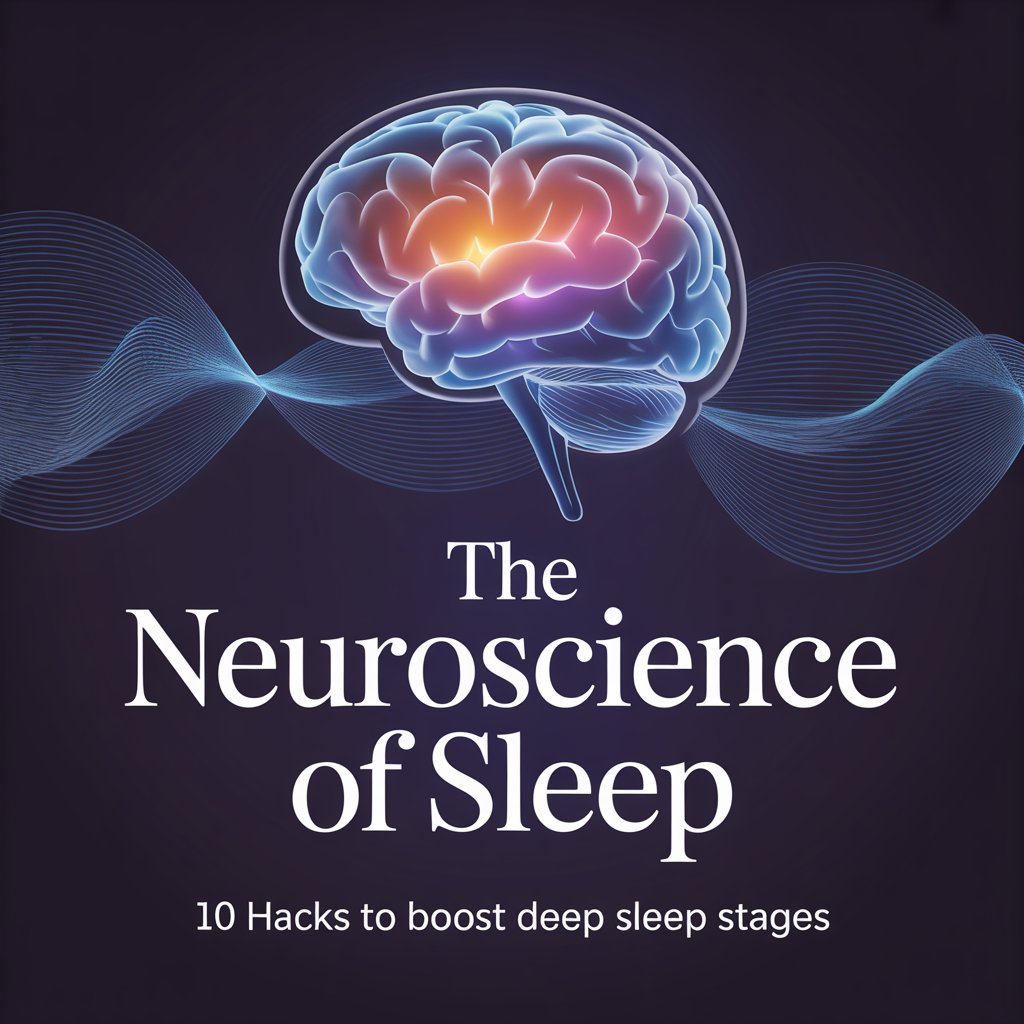
What Deep Sleep Is — And Why It’s Different From the Rest
Sleep is not a single state. Every night, your brain cycles through a structured sequence of stages, each with a distinct neurological signature and purpose. This architecture is called sleep architecture, and disrupting it has measurable consequences.
The Four Sleep Stages
Sleep is divided into two broad categories: non-REM (NREM) sleep and REM sleep.
- Stage 1 (NREM 1): Light sleep. You drift in and out of consciousness. Muscles may twitch. Brain activity slows from waking patterns but hasn’t shifted into sleep mode yet. This stage lasts just a few minutes.
- Stage 2 (NREM 2): Still light sleep, but more consolidated. Heart rate drops, body temperature decreases, and the brain produces bursts of rapid activity called sleep spindles, which are thought to play a role in memory consolidation. You spend roughly 50% of your total sleep time here.
- Stage 3 (NREM 3): This is deep sleep, also called slow-wave sleep (SWS), because the brain generates large, synchronized electrical oscillations called delta waves. This is the most physically restorative stage of sleep. It’s hardest to wake someone from, and if you are woken, you’ll feel disoriented and groggy.
- REM Sleep: REM stands for Rapid Eye Movement. This is when most vivid dreaming occurs. The brain is highly active — almost as active as when you’re awake — but the body is temporarily paralyzed to prevent you from acting out dreams. REM sleep is critical for emotional regulation and creative problem-solving.
A full sleep cycle lasts approximately 90 minutes, and a healthy adult goes through four to six cycles per night. Critically, the proportion of deep sleep and REM sleep shifts across the night: deep sleep dominates the first half of the night, while REM sleep becomes longer in the second half. This is why cutting sleep short — even by an hour — disproportionately robs you of REM sleep.
How Your Brain and Body Benefit During Deep Sleep
Deep sleep is sometimes described as the body’s maintenance window. During slow-wave sleep, a cascade of restorative processes unfolds that simply cannot happen in lighter stages.
Memory Consolidation
During waking hours, your hippocampus — the brain’s short-term memory hub — temporarily stores new information. During deep sleep, this information is “replayed” and transferred to the neocortex for long-term storage. This process, called memory consolidation, is why pulling an all-nighter before an exam almost always backfires. You may cram the facts, but without deep sleep, they won’t stick.
Physical Recovery and Tissue Repair
Deep sleep triggers a surge of human growth hormone (HGH) from the pituitary gland. HGH drives cellular repair, muscle recovery, bone density maintenance, and immune function. Athletes who consistently prioritize deep, restorative sleep recover faster, perform better, and have lower injury rates — not because of anything they do in the gym, but because of what happens when they’re unconscious.
The Brain’s Cleanup Crew: The Glymphatic System
One of the most exciting discoveries in sleep neuroscience is the glymphatic system — a network of channels in the brain that flushes out metabolic waste products, including beta-amyloid, a protein strongly associated with Alzheimer’s disease. This system is almost exclusively active during deep sleep. Chronically poor sleep quality has been directly linked to accelerated beta-amyloid buildup. Getting enough slow-wave sleep may be one of the most powerful things you can do for long-term brain health.
Mood Regulation and Stress Resilience
During deep sleep, cortisol (the primary stress hormone) drops to its lowest levels of the day, giving your nervous system a chance to reset. People who consistently lack deep sleep show heightened amygdala reactivity — meaning the emotional alarm center of the brain becomes overactive. The result: you’re more irritable, more anxious, and less able to manage stress. Sleep deprivation doesn’t just make you tired; it fundamentally alters your emotional landscape.
Modern Habits That Are Sabotaging Your Deep Sleep
Before diving into solutions, it’s worth naming the enemy. Several entirely normal modern behaviors are scientifically shown to reduce slow-wave sleep and fragment sleep cycles.
- Blue light exposure in the evening. Screens emit light at wavelengths that suppress melatonin production — the hormone that signals to your brain it’s time to sleep. Even two hours of screen use before bed can delay sleep onset and reduce deep sleep.
- Irregular sleep schedules. Your body runs on a circadian rhythm — a roughly 24-hour internal clock governed by the hypothalamus. Going to bed and waking at wildly different times on weekdays versus weekends (so-called “social jet lag”) destabilizes this clock, reducing sleep quality even when total sleep time looks adequate.
- Alcohol consumption. Many people believe alcohol helps sleep because it speeds up sleep onset. It does — but it also severely fragments sleep in the second half of the night, suppressing REM sleep and reducing total slow-wave sleep.
- Chronic stress. Elevated cortisol makes it biologically harder to reach deep sleep stages. If you’re lying awake with a racing mind, that’s cortisol at work.
- Sedentary lifestyle. Physical activity is one of the strongest natural promoters of slow-wave sleep. People who don’t exercise regularly tend to get less deep sleep.
10 Science-Backed Hacks to Boost Deep Sleep Stages
Hack 1: Lock In a Consistent Sleep Schedule
Your circadian rhythm thrives on consistency. Going to bed and waking up at the same time every day — yes, including weekends — reinforces your body’s natural sleep-wake cycle and makes it dramatically easier to reach and sustain deep sleep stages. Even a 30-minute drift on weekends is enough to disrupt sleep architecture across the week.
Try this: Set a fixed wake time first. Everything else will calibrate around it within a few weeks.
Hack 2: Lower Your Bedroom Temperature
Core body temperature needs to drop by approximately 1–2°F to initiate deep sleep. A warm environment fights this process. Research consistently shows that a sleep environment cooled to between 60–67°F (15–19°C) produces longer periods of slow-wave sleep.
Try this: Use breathable bedding, consider a cooling mattress pad, and crack a window if possible.
Hack 3: Cut Screens at Least 60–90 Minutes Before Bed
Blue light from phones, tablets, and computers suppresses melatonin by up to 50%, directly delaying the biological signal to sleep. Less melatonin at bedtime means a longer runway before you reach deep sleep — if you reach it at all within your optimal window.
Try this: Enable Night Mode or use blue-light-blocking glasses starting at sunset. Better yet, put devices in another room an hour before bed.
Hack 4: Get Morning Sunlight Within 30 Minutes of Waking
This one surprises people. Your circadian rhythm is anchored by light — specifically, bright natural light in the morning. Sunlight exposure in the morning sets the timing of your melatonin release that evening. No morning light means a delayed and blunted melatonin curve, which translates to worse sleep quality that night.
Try this: Step outside for 10–15 minutes within 30 minutes of waking, even on cloudy days. Overcast skies still deliver 10,000+ lux of light — far more than indoor lighting.
Hack 5: Use Exercise Strategically
Regular aerobic exercise is one of the most effective natural tools for increasing slow-wave sleep. Studies show that people who exercise regularly fall asleep faster and spend more time in deep sleep stages. However, timing matters: vigorous exercise within two to three hours of bedtime can elevate cortisol and core body temperature, making sleep onset harder.
Try this: Aim for 30–45 minutes of moderate-to-vigorous exercise most days, finishing at least three hours before bed. Morning or early afternoon workouts are ideal for sleep optimization.
Hack 6: Develop a Wind-Down Ritual
Your nervous system can’t flip from “go” to “sleep” instantly. A consistent pre-sleep ritual — done at the same time each night — signals to your brain that sleep is coming, helping lower cortisol and ease the transition into deeper sleep stages. This is a cornerstone of good sleep hygiene.
Try this: Choose 3–4 calming activities: a warm bath or shower (the subsequent drop in body temperature promotes sleepiness), light reading, journaling, gentle stretching, or slow breathing exercises. Do these in the same order nightly.
Hack 7: Watch What You Eat and When
Heavy meals, caffeine, and alcohol close to bedtime all disrupt sleep architecture. Caffeine has a half-life of five to seven hours — a 3 p.m. coffee still has half its caffeine in your system at 8 p.m. Alcohol, as noted, suppresses REM sleep and reduces overall sleep recovery. On the positive side, foods high in magnesium (leafy greens, nuts, seeds) and tryptophan (turkey, eggs, dairy) support the production of serotonin and melatonin.
Try this: Cut caffeine by 2 p.m. Finish dinner at least two to three hours before bed. A small, magnesium-rich snack in the evening is fine.
Hack 8: Manage Stress and Anxiety Actively
Stress and sleep exist in a vicious cycle: poor sleep raises cortisol, and high cortisol prevents deep sleep. Breaking this cycle requires deliberate stress management — not just hoping you’ll relax at bedtime. Mindfulness meditation has been shown in clinical trials to significantly improve sleep quality, specifically by reducing nighttime cortisol spikes and increasing slow-wave sleep.
Try this: Practice 10–15 minutes of mindfulness or diaphragmatic breathing daily — not only at bedtime, but as a regular stress management habit. Apps like Insight Timer or Headspace offer free guided sessions.
Hack 9: Limit Naps (or Time Them Carefully)
A long nap in the afternoon can reduce your sleep pressure — the biological drive to sleep that builds throughout the day — making it harder to reach deep sleep that night. However, a short nap of 10–20 minutes, taken before 3 p.m., can improve alertness without disrupting nighttime sleep architecture.
Try this: If you nap, keep it under 25 minutes and set an alarm. Napping after 3 p.m. is generally counterproductive for healthy sleep.
Hack 10: Consider Magnesium Glycinate
Magnesium is involved in hundreds of biochemical processes, including the regulation of GABA — a neurotransmitter that promotes relaxation and sleep onset. Many Americans are deficient. Magnesium glycinate, specifically, has shown promise in small studies for improving sleep quality and increasing time in slow-wave sleep. Unlike some sleep aids, it is non-habit-forming.
Try this: Speak with your doctor before starting any supplement, but 200–400 mg of magnesium glycinate taken 30–60 minutes before bed is a commonly used protocol.
How to Know If You’re Getting Enough Deep Sleep
You can’t directly measure sleep stages without a clinical sleep study (polysomnography) or a reasonably accurate consumer wearable. But you don’t necessarily need data to tell. Here are the signs your sleep is restorative — and the red flags that suggest it isn’t.
Signs of good deep sleep:
- You wake up naturally around the same time, feeling refreshed
- You feel mentally sharp and focused within an hour of waking
- You have stable mood and emotional resilience throughout the day
- You can sustain attention for extended periods without craving caffeine
- Physical soreness from exercise resolves noticeably overnight
Signs your sleep is not restorative:
- You need an alarm (or multiple alarms) to wake up
- You feel unrefreshed even after 7–9 hours in bed
- Persistent brain fog, poor memory, or difficulty concentrating
- Mood swings, irritability, or heightened anxiety
- Craving sugar or carbohydrates throughout the day (a sign of sleep-related metabolic disruption)
- Frequently waking during the night or having vivid, disturbing dreams
When Poor Sleep May Signal a Medical Issue
Lifestyle changes can go a long way, but not all sleep problems have lifestyle solutions. If you’ve applied consistent sleep hygiene practices for several weeks and still struggle, it’s worth speaking with a healthcare provider.
Conditions that interfere with deep sleep include obstructive sleep apnea (a common, underdiagnosed condition where breathing repeatedly stops during sleep), restless leg syndrome, periodic limb movement disorder, insomnia disorder, and various hormonal or neurological conditions. A proper sleep study can identify these issues clearly. Cognitive Behavioral Therapy for Insomnia (CBT-I) is currently the gold-standard first-line treatment for chronic insomnia — more effective long-term than sleep medication.
Conclusion: Small Shifts, Dramatic Results
The neuroscience of sleep makes one thing unmistakably clear: deep sleep isn’t a passive state. It’s one of the most metabolically active, neurologically complex, and physiologically critical processes your body performs. Memory consolidation, brain waste clearance, hormonal restoration, immune support — all of it hinges on those slow-wave sleep stages that most people are quietly robbing themselves of, one late-night scroll at a time.
The good news is that the brain is remarkably responsive to behavioral change. You don’t need an overhaul — you need consistency. Pick two or three of the hacks above and apply them for two to three weeks before adding more. Anchor your sleep schedule first. Then control your light environment. Then work backwards on your evening routine.
Deep, restorative sleep isn’t a luxury. It’s the foundation that every other health goal — sharper focus, better fitness, lower stress, longer life — is built on. And for most people, it’s only a few habit changes away.
Always consult a qualified healthcare professional before making significant changes to your supplement use or if you suspect an underlying sleep disorder.