
It’s 11:15 p.m. The lights are off, the house is quiet, and you’re staring at the ceiling replaying a work email, tomorrow’s grocery list, and that one comment someone made three days ago. Your body is tired. Your mind, apparently, was not invited to bed.
If that sounds familiar, you’re not alone. Millions of US adults struggle to transition from a stimulating day into restful sleep. And while no single scent or product can flip a “sleep switch,” building a repeatable lavender sleep ritual can help your brain and body recognize that the day is winding down. Lavender has long been associated with calm, clean linens, and comfort. When you pair its gentle aroma with consistent sensory cues—dim light, soft textures, quiet sound, slow breathing—it becomes less of a product and more of a signal. Over time, that signal says, You can let go now.
Here are six sensory hacks to build a calming, realistic bedtime routine around lavender. No perfection required. No miracle promises. Just gentle, repeatable steps.
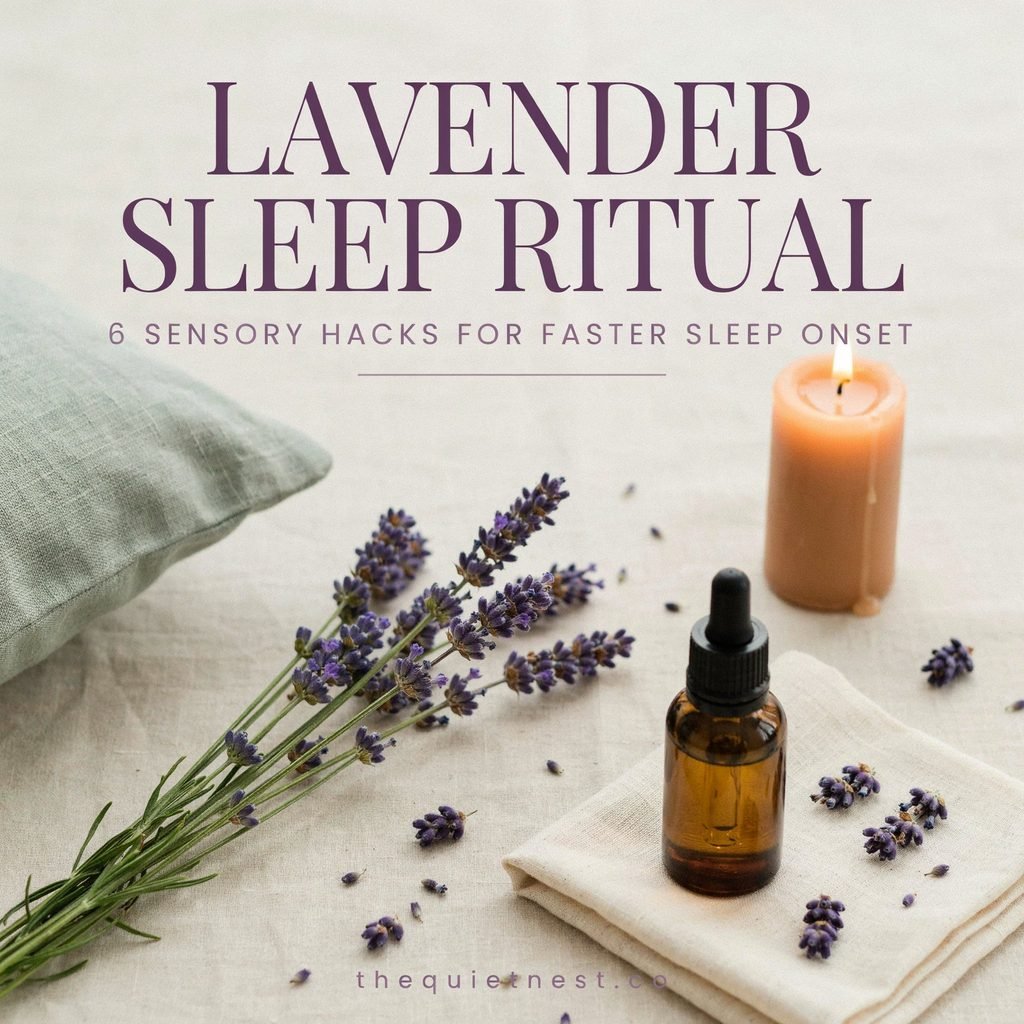
How a Lavender Sleep Ritual May Support Faster Sleep Onset
Sleep onset is simply the transition from being awake to being asleep. For some people it takes five minutes; for others, it stretches into an hour of restless thinking. What helps bridge that gap is not willpower—it’s cues. When you repeat the same scent, lighting, sound, and tactile sensations night after night, your brain begins to associate those inputs with rest. Think of it like a well-worn path through a field: the more you walk it, the easier it becomes to follow.
A lavender sleep ritual works on this principle. The scent of lavender may help create a calming association with bedtime, but it works best alongside broader sleep hygiene habits: a relatively consistent sleep schedule, limiting late-afternoon caffeine, keeping your bedroom cool, dark, and quiet, and reducing blue light at night.
You don’t need all six hacks every evening. Start with two or three that fit your life. Consistency matters more than complexity.
Keep expectations realistic. These ideas support a wind-down routine; they do not replace medical care. If you experience persistent difficulty falling asleep, loud snoring, gasping at night, or daytime impairment, talk with a healthcare professional.
Sensory Hack #1: Make Lavender Your Signature Bedtime Scent
Scent is one of the fastest routes to memory and emotion. A familiar aroma can anchor your nighttime routine the way a favorite song anchors a road trip. The key is choosing one lavender format and keeping it light.
Practical options include:
- Lavender pillow spray: Mist one or two sprays lightly onto your pillowcase or top sheet about ten minutes before lying down.
- Lavender essential oil on a tissue: Place two to three drops of properly diluted lavender essential oil on a cotton ball or tissue and set it on your nightstand—never directly on skin or bedding.
- Lavender sachet: Tuck a small dried-lavender sachet into a bedside drawer or beneath your pillowcase for a subtle, ongoing scent.
- Essential oil diffuser: Run an ultrasonic lavender diffuser for 15 to 30 minutes while you wash your face and change into sleepwear. Turn it off before you get into bed unless the manufacturer’s guidance says otherwise.
- Lavender lotion: Smooth a small amount of lavender-scented hand or body cream onto your wrists, hands, or feet as part of your evening self-care routine.
Pick one format. Layering a candle, a diffuser, a spray, and a lotion can overwhelm the room and trigger headaches or sensitivity, especially if you have migraines, allergies, asthma, or pets in the bedroom.
A quick safety note on lavender aromatherapy: Never ingest essential oils unless directed by a qualified professional. Do not apply undiluted lavender essential oil directly to skin—always follow dilution instructions on the product label. Keep oils out of reach of children and pets, and discontinue use if you notice irritation, breathing changes, or skin reactions. If you’re pregnant, nursing, or managing a respiratory condition, check with your healthcare provider before using essential oils.
Sensory Hack #2: Pair Lavender With Softer, Dimmer Evening Light
Bright overhead lights and phone screens send a “stay alert” message to your circadian rhythm. About 30 to 60 minutes before your target bedtime, begin lowering the light in your space.
- Swap overhead lighting for a warm-toned bedside lamp or a low-wattage salt lamp.
- Choose amber or warm-white bulbs (2700K or lower) for your bedroom.
- Activate your phone’s night mode, then set the phone on a charger across the room or in another room entirely.
- If you apply lavender lotion or mist your pillow spray, do it after the lights dim so the scent becomes linked with the visual cue of softness.
Try creating a simple “lavender lighting rule”: the moment the lavender scent comes out, overhead lights go off. That one pairing—scent plus dim glow—becomes a reliable signal you can repeat every night without thinking.
If you need to get up during the night, use a dim night-light in the hallway or bathroom rather than flipping on bright switches. The goal is to keep your brain in “winding down” mode, not to jolt it back into daytime alertness.
Sensory Hack #3: Use Touch to Make the Bed Feel Like a Sleep-Only Sanctuary
Physical comfort is easy to overlook until a scratchy tag or a too-warm blanket pulls you out of relaxation. Before investing in expensive sleep gadgets, check the basics:
- Choose breathable cotton, linen, or bamboo sheets that wick moisture and feel soft against your skin.
- Make sure your pillow supports your preferred sleep position.
- Layer a lightweight blanket with a warmer throw so you can adjust through the night.
- Keep your bedroom temperature cool—many people sleep best around 60 to 68 °F.
- If your feet run cold, slip on a pair of soft cotton socks.
Add lavender to the tactile experience: apply a small amount of lavender hand cream and gently massage each hand for 20 seconds. The combination of gentle pressure and familiar scent can help your shoulders drop.
If you find a weighted blanket comforting, use one that feels right for your body and follow manufacturer weight guidelines. A soft, breathable sleep mask can also block stray light.
Whenever possible, reserve your bed for sleep and intimacy. Scrolling, working, or watching stressful television in bed can weaken the mental link between your mattress and rest.
Five-minute tactile reset: Smooth the sheets, fluff your pillow, add one light mist of lavender sleep spray, rub lotion into your hands, and take three slow breaths before you lie down. That tiny sequence tells your body, This space is for rest.
Sensory Hack #4: Create a Soundscape That Doesn’t Compete With Your Thoughts
Some people need silence; others find that quiet amplifies racing thoughts at night. If you’re in the second group, a predictable background sound can keep your mind from spiraling.
Options that work well:
- White noise or pink noise from a machine or app
- A fan on low
- Gentle rain or ocean sounds
- Low-volume instrumental or calming music for sleep
- A guided sleep meditation or body-scan recording
- A calm bedtime podcast with an automatic sleep timer
The goal is predictability, not novelty. Avoid news, true-crime podcasts, emotionally intense playlists, or anything that auto-plays endlessly. Set a 30- to 60-minute timer so the audio fades out and doesn’t disturb deeper sleep later.
Pair this with your lavender cue: the scent signals the start of the wind-down routine, and the soft sound becomes the background that carries you toward rest. Over a week or two, the combination starts to feel automatic.
Sensory Hack #5: Add a Warm Lavender Transition Before Bed
A warm pre-bed activity creates a pleasant contrast with a cool bedroom, and that temperature shift can support your body’s natural drop in core temperature as bedtime approaches. Aim to begin this transition 45 to 90 minutes before you plan to sleep.
- Lavender bath: Soak for 15 to 20 minutes in warm water with a lavender bath product formulated for skin use.
- Warm shower + lavender body lotion: Step out, pat dry, and smooth on a lavender-scented cream while the bathroom is still steamy.
- Foot soak: A basin of warm water with a lavender-infused soak product can be a low-effort alternative to a full bath.
- Chamomile lavender tea: Brew a caffeine-free herbal blend and sip it slowly under dim light, phone set aside.
Important: lavender tea and lavender essential oil are not interchangeable. Use food-grade tea products as directed on the package. Never add essential oils to beverages.
Keep the lighting low and the atmosphere unhurried. This is not a task to rush through; it’s a bridge between doing and resting.
Sensory Hack #6: Give Your Mind a Repeated “Goodnight” Signal
Lavender can set the sensory stage, but if your mind is still problem-solving, sleep onset stays elusive. Give yourself a simple, repeatable mental closing ritual.
Try this breathing pattern: inhale comfortably through your nose for a count of four, then exhale slowly through your mouth for a count of six. Repeat for one to three minutes. It’s not a treatment for nighttime anxiety—it’s a gentle way to slow the pace of your thoughts. Many people find it relaxing when paired with the familiar scent of lavender.
Other options:
- Jot tomorrow’s top three tasks on a notepad, then close it.
- Make a brief “not tonight” list for worries or half-formed ideas.
- Do a one-minute body scan, releasing tension from forehead to toes.
- Repeat a neutral phrase: “The day is done. I can return to this tomorrow.”
- Read a few pages of a low-stakes book under dim light.
- Do a couple of gentle stretches that feel comfortable.
The specific technique matters less than the repetition. After your lavender lotion or pillow spray, do the same breathing or journaling cue each night. Familiarity is the point.
A 20-Minute Lavender Bedtime Routine to Try Tonight
- Plug your phone into a charger outside arm’s reach, or switch on Do Not Disturb.
- Dim overhead lights; turn on a warm bedside lamp.
- Use one light lavender cue—a pillow spray mist, a sachet, a few drops in a diffuser, or a dab of lotion.
- Brew a cup of caffeine-free chamomile lavender tea, or take a warm shower.
- Change into comfortable sleepwear and set your bedroom to a cool, dark temperature.
- Start white noise, rain sounds, or a short guided sleep meditation.
- Write down tomorrow’s top priorities, then practice slow breathing for two minutes.
- Get into bed. Resist the urge to check the clock repeatedly.
You don’t need every step every night. Even a five-minute version—dim lights, one lavender cue, three slow breaths—reinforces the habit.
Common Lavender Sleep Ritual Mistakes to Avoid
- Overdoing the fragrance. One light source of lavender is plenty. Too much can cause headaches or irritation.
- Skipping a patch test. Try a new lotion or oil on a small area of skin before your first full use.
- Applying undiluted essential oil to skin or pillows. Always follow product directions and dilution guidance.
- Relying on a diffuser to fix inconsistent sleep habits. Scent supports good sleep hygiene; it doesn’t replace it.
- Drinking caffeinated “calming” beverages late. Check labels; some blends contain green or black tea.
- Turning the ritual into a perfectionist chore. Miss a night? Pick it back up tomorrow.
- Staying in bed for hours scrolling or worrying. If sleep isn’t coming after roughly 20 minutes, get up, do something calm under low light, and return when you feel drowsy.
- Ignoring persistent symptoms. Ongoing sleep difficulties deserve professional attention.
When Lavender Is Not Enough
Lavender is one pleasant tool in a larger sleep-supportive lifestyle, not a standalone solution. If trouble falling asleep lasts more than a few weeks, significantly affects your daytime energy or mood, includes loud snoring or gasping, or involves safety concerns like drowsy driving, please speak with a healthcare professional. The same applies if you’re pregnant, managing a respiratory condition, taking medications that affect sleep, or noticing skin or breathing reactions to scented products. There is no shame in asking for help; good sleep is worth protecting.
Conclusion
The most effective lavender sleep ritual isn’t the longest, most expensive, or most photogenic one. It’s the one you can repeat on a tired Tuesday after work, on a chaotic evening with kids, and on a quiet Sunday night alike. Choose one light lavender cue, pair it with one or two additional sensory habits—softer light, a warm cup of tea, three slow breaths—and give the routine a week or two of gentle consistency.
You don’t need to overhaul your entire evening. Start small tonight: dim the lights, choose one light lavender cue, and give yourself a few unrushed minutes to let the day end. Sleep doesn’t have to be a battle. Sometimes it just needs a familiar, calming invitation.
FAQ
Does lavender really help you sleep better?
Some people find the scent of lavender relaxing, and it may help create a calming association with bedtime when used consistently as part of a wind-down routine. However, individual responses vary, and lavender is not a treatment for insomnia or any medical sleep condition. It works best alongside solid sleep hygiene habits.
What is the best way to use lavender for sleep?
There’s no single “best” method. A lavender pillow spray, a sachet in your nightstand, a brief diffuser session, or a small amount of lavender lotion can all work. The most important factor is choosing one format you enjoy and repeating it nightly so it becomes a recognizable cue.
Is it safe to sleep with a lavender diffuser on all night?
Follow the specific product’s instructions. Many manufacturers recommend timed intervals or turning the diffuser off before sleep. Ensure the room is ventilated, keep the diffuser away from children and pets, and discontinue use if you notice any irritation or breathing discomfort.
Can I put lavender essential oil directly on my pillow?
It’s generally better to avoid applying undiluted essential oil directly to fabric you’ll press your face against. Instead, use a purpose-made lavender pillow spray, place a drop or two on a tissue on your nightstand, or use a sachet. This reduces the risk of skin contact with concentrated oil.
What can I combine with lavender for a better bedtime routine?
Lavender pairs well with dim warm lighting, caffeine-free chamomile tea, white noise or rain sounds, comfortable bedding, a cool room temperature, slow breathing exercises, and a consistent sleep schedule. The combination of sensory cues matters more than any single element.
How long does it take for a new sleep ritual to feel effective?
Most people notice the routine starting to feel familiar within one to two weeks of consistent repetition. The goal isn’t instant results; it’s building a gentle association between your chosen cues and relaxation. If sleep difficulties persist beyond a few weeks, consider speaking with a healthcare professional.