Why Sleep Tracking Matters
We’ve all been there: you spend a solid eight hours in bed, yet you still wake up feeling groggy, sluggish, and ready for a third cup of coffee. If this sounds familiar, you aren’t alone. In fact, the pursuit of better rest has become a national obsession. According to recent data, nearly half of U.S. adults (48%) have used a sleep tracking device, a massive jump from just 35% in 2023 . From smartwatches to sleek rings, everyday Americans are turning to technology to decode their nights.
But what exactly is sleep tracking? In simple terms, it’s the use of wearables, smartwatches, rings, and sleep apps to monitor your nocturnal habits. However, simply strapping on a device and staring at a colorful graph in the morning isn’t enough to fix your fatigue. The magic isn’t just in tracking sleep, but in knowing how to use the data to actually improve sleep quality.
In this guide, we’ll explore how to transform raw wearable sleep insights into actionable sleep optimization strategies. Whether you’re a tech enthusiast or just someone desperate to wake up refreshed, these 10 sleep tracker tips will help you finally bridge the gap between time spent in bed and time spent truly resting.
How Wearables Track Your Sleep
Before diving into the hacks, it helps to understand the science happening on your wrist or finger. How do these gadgets actually know if you’re dreaming or tossing and turning?
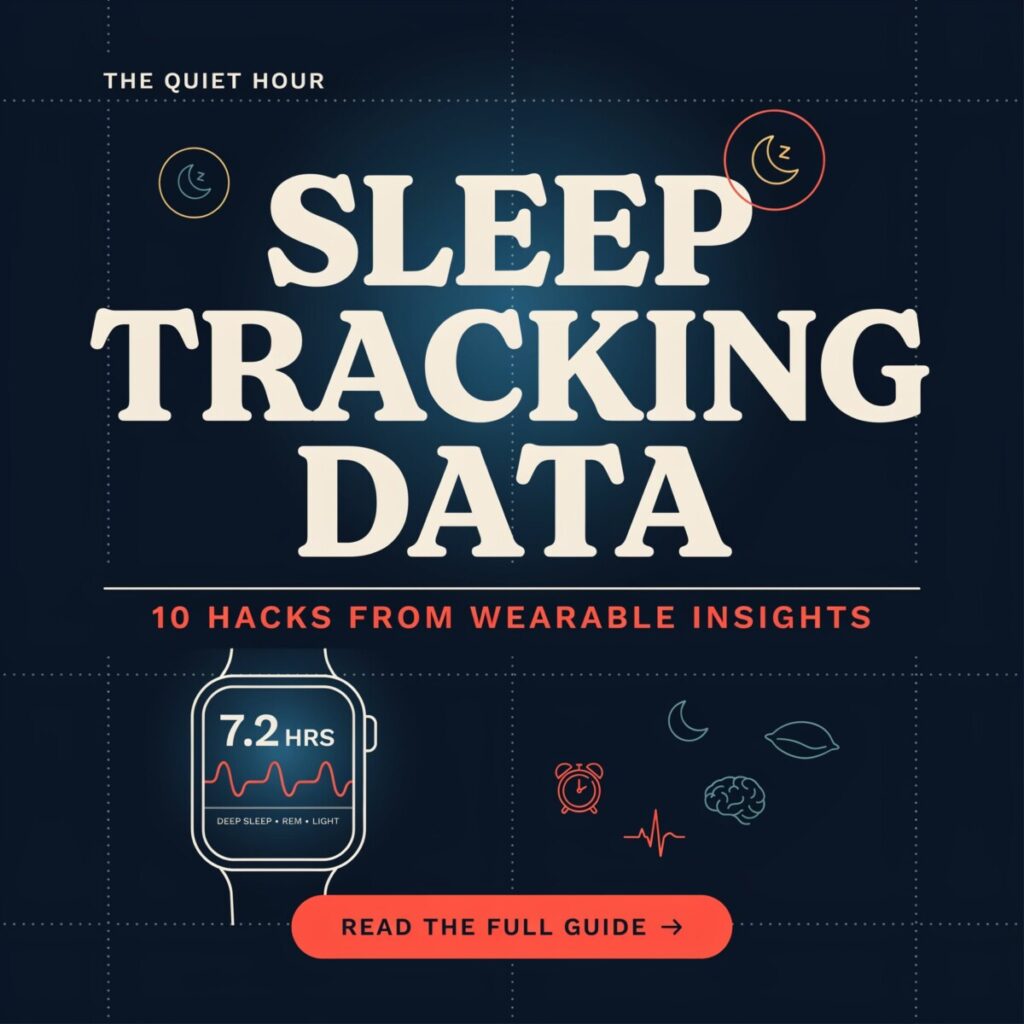
Modern wearables estimate your sleep stages—light sleep, deep sleep, and REM sleep—by combining multiple biometric sensors . They use accelerometers to track your movement and optical heart rate sensors to monitor your pulse. More advanced devices also measure heart rate variability (HRV), skin temperature variations, and even blood oxygen saturation (SpO2) to paint a highly detailed picture of your night.
Common devices leading the charge in smartwatch sleep tracking and sleep tech include the Apple Watch, Fitbit, Garmin, Samsung Galaxy Watch, WHOOP, and the Oura Ring. Each platform uses proprietary algorithms to crunch this biometric data into an easy-to-read “sleep score” and a breakdown of your sleep stages.
It is important to remember one crucial limitation: wearables are not medical-grade devices. They cannot measure brain waves to definitively diagnose sleep disorders. However, they are incredibly powerful tools for identifying long-term trends and driving positive behavior change. By understanding your baseline, you can make targeted adjustments to your lifestyle that yield real-world results.
Hack #1 – Focus on Weekly Trends, Not Single Nights
One of the biggest mistakes new sleep trackers make is obsessing over a single bad night. You wake up, check your app, see a terrible sleep score, and suddenly feel stressed—which ironically makes your sleep worse the next night! This phenomenon is sometimes called “orthosomnia,” an unhealthy obsession with perfect sleep.
To combat this, shift your focus to sleep tracking trends. Weekly averages of your sleep duration and overall sleep score matter far more than one isolated night of tossing and turning. Human bodies are resilient, and one bad night rarely derails your overall health.
Open your app and toggle to the “last 7 days” or “last 30 days” view. This bird’s-eye view of your long-term sleep data reveals your true habits. Are you consistently getting less than seven hours on weekdays? Are your weekends completely out of sync?
Action Tip: Set a realistic minimum sleep duration goal (e.g., 7 to 8 hours) and track your consistency over a full week rather than judging yourself on a daily basis.
Hack #2 – Use Bedtime Consistency to Boost Sleep Quality
Your body loves routine. When you look at your wearable sleep insights, pay close attention to your bedtime and wake time variability. If you’re going to bed at 10:30 p.m. on Monday but staying up until 2:00 a.m. on Friday, your internal clock is constantly fighting a losing battle.
Maintaining a consistent sleep schedule is one of the most effective ways to regulate your circadian rhythm and improve sleep efficiency. When you go to bed and wake up at the same time every day, your brain learns exactly when to release melatonin (the sleep hormone) and when to release cortisol (the wake-up hormone).
Action Tip: Use your wearable or smartphone’s built-in bedtime reminders and “wind-down” features. Set a daily alarm for when you should start getting ready for bed, not just when you need to be asleep. Protecting your bedtime routine is a foundational pillar of good sleep hygiene.
Hack #3 – Turn Deep Sleep Data into Environmental Tweaks
Deep sleep, also known as slow-wave sleep, is the physical restoration phase of your night. It’s when your body repairs tissues, builds bone and muscle, and strengthens the immune system. For most healthy adults, deep sleep should account for about 10% to 20% of the night .
If your wearable consistently shows low deep sleep, it might be time to look at your physical sleep environment. Deep sleep is highly sensitive to external disturbances and internal body temperature. In fact, your core body temperature needs to naturally drop by a few degrees to initiate and maintain deep sleep cycles. If your room is too warm, your body struggles to cool down, keeping you trapped in lighter, less restorative sleep stages.
Action Tips:
- Adjust bedroom temperature: Experts suggest that the optimal sleeping temperature for adults is between 60 and 67° F .
- Block out light and sound: Invest in blackout curtains and a white noise machine to prevent micro-awakenings that pull you out of deep sleep.
- Watch your intake: Cut off caffeine by the early afternoon and reduce late-night alcohol. While alcohol might help you fall asleep faster, it severely fragments your sleep architecture and suppresses deep sleep.
Hack #4 – Use REM Sleep Insights to Protect Memory and Mood
While deep sleep repairs the body, Rapid Eye Movement (REM) sleep repairs the mind. REM sleep is crucial for memory consolidation, emotional regulation, and cognitive function. For the average adult, REM sleep usually makes up about 25% of total sleep time .
If your wearable shows your REM sleep is consistently dipping below 20%, you might notice brain fog, irritability, or difficulty concentrating during the day. REM sleep is heavily concentrated in the second half of the night, meaning that cutting your sleep short by waking up too early disproportionately robs you of this vital stage.
Action Tip: Align your sleep window with your natural chronotype and ensure you are giving yourself a full 7.5 to 8 hours in bed. Furthermore, avoid “social jet lag” by not drastically shifting your sleep schedule on the weekends. Protecting those final hours of sleep is essential for mood and memory optimization.
Hack #5 – Let HRV Guide Your Recovery Days
Heart rate variability (HRV) is one of the most powerful, yet misunderstood, metrics in wearable health insights. Simply put, HRV measures the variation in time between consecutive heartbeats. A higher HRV generally indicates that your autonomic nervous system is balanced, resilient, and ready to handle stress. A lower HRV suggests your body is under strain—from intense workouts, illness, poor sleep, or mental stress.
Instead of just looking at your sleep score, check your morning HRV trend. It acts as a daily readiness gauge, telling you whether your sympathetic (fight-or-flight) or parasympathetic (rest-and-digest) nervous system is currently in the driver’s seat.
Action Tips:
- If your HRV drops significantly and your sleep score is poor, listen to your body. Swap a high-intensity interval training (HIIT) session for a lighter recovery workout, like yoga or a brisk walk.
- If your evening HRV is unusually low, add a 5-minute guided breathing exercise or short meditation to your nighttime routine to shift your nervous system into “rest and digest” before bed.
Hack #6 – Connect Late-Night Habits to Sleep Disruptions
Data without context is just noise. To truly improve sleep quality, you need to connect the dots between your daytime behaviors and your nighttime data. Most sleep tracking apps allow you to tag or log daily habits, such as late meals, alcohol consumption, blue light exposure, or urgent late-night work.
You might notice that on nights where you log a glass of wine or a heavy meal after 8:00 p.m., your wearable records increased awakenings and more restless sleep periods. Alcohol and heavy digestion force your body to work hard when it should be resting, leading to fragmented sleep.
Action Tip: Start using the “notes” or “tags” feature in your sleep app. Log your daily caffeine intake, screen time, and stress levels. After a few weeks, review your sleep behavior data to identify your personal sleep disruptors. Once you know your unique triggers, you can eliminate them.
Hack #7 – Use Smart Alarms Based on Sleep Stages
Waking up in the middle of a deep sleep cycle is a recipe for sleep inertia—that heavy, groggy feeling that can linger for hours. Fortunately, modern sleep tech offers a brilliant solution: the smart alarm.
Smart alarms use your wearable’s real-time sleep stage detection to wake you up during a lighter phase of sleep. Instead of jolting you awake at a rigid time, the smart alarm looks for a window of light sleep within a designated timeframe.
Action Tip: Set a wake-up window on your device (e.g., 6:30 a.m. to 7:00 a.m.). If your wearable detects you are in light sleep at 6:42 a.m., it will gently vibrate or chime, allowing you to wake up feeling significantly more refreshed and alert than if you were pulled out of deep sleep at exactly 7:00 a.m.
Hack #8 – Combine Sleep Tracker Data with a Simple Sleep Diary
While wearables are fantastic at measuring physiological data, they cannot measure how you feel. You might have a “perfect” sleep score on your app, but if you woke up with a headache, high anxiety, or a lingering sense of dread, that qualitative data is missing from the algorithm. Subjective mood heavily impacts perceived sleep quality and daytime performance.
This is where a manual sleep diary becomes an invaluable tool. By pairing your wearable data with subjective notes about your mood, energy levels, and daily stressors, you gain a 360-degree view of your sleep health. This combination helps identify hidden patterns that tech alone might miss, such as anxiety-induced insomnia or mid-day energy crashes.
Action Tip: Keep a simple 1–2 line nightly log in your phone’s Notes app or a physical journal. Jot down your subjective energy level in the morning and any notable stressors from the day. Cross-reference this sleep journal with your wearable data at the end of the month for profound insights.
Hack #9 – Use Sleep Scores to Set Realistic Goals
Gamification is a powerful tool for behavior change. Most wearable apps distill your complex biometric data into a single, easy-to-understand sleep score out of 100. While it’s tempting to chase a perfect 100 every night, striving for perfection can lead to frustration.
Instead, use your sleep score to set realistic, incremental sleep goals. If your 30-day average is a 65, don’t aim for a 95 next week. Aim for a 70. Small, sustainable improvements are much more likely to stick than drastic lifestyle overhauls.
Action Tip: Pick just one metric to focus on for the next 30 days. If your score is being dragged down by poor bedtime consistency, make that your sole focus. Once you master that, move on to increasing your sleep duration or reducing nighttime awakenings. Treat sleep coaching as a marathon, not a sprint.
Hack #10 – Know When to Call a Sleep Specialist
Wearable sleep insights are incredible for lifestyle optimization, but it is crucial to understand wearable sleep limitations. Your smartwatch cannot diagnose clinical sleep disorders like obstructive sleep apnea, restless legs syndrome, or chronic insomnia.
However, your device can serve as an excellent early warning system. You should pay close attention to sleep apnea warning signs, such as consistent data showing very fragmented sleep, sudden drops in blood oxygen (SpO2), or if your partner complains about your loud snoring. Furthermore, if your wearable says you are sleeping 9 hours a night but you still suffer from overwhelming daytime fatigue, something is medically amiss.
Action Tip: Know when to see a sleep doctor. If you suspect a clinical issue, export your sleep tracking reports and share them with a healthcare provider or a specialized sleep clinic. Your wearable data can provide a specialist with weeks of valuable context before you even step foot in their office.
Safety, Privacy, and Data Considerations
As we invite more sensors into our bedrooms, health data privacy becomes a legitimate concern. Sleep data is highly intimate; it reveals your daily routines, your stress levels, and your physical health.
Before purchasing a new device, research the brand’s data policies. How is your sleep data stored? Is it encrypted? Reputable brands prioritize wearable data security and allow you to opt out of sharing your information with third-party advertisers or insurance companies. Take a few minutes to dive into your sleep app privacy settings to ensure you are only sharing what you are comfortable with.
Conclusion: Turn Insights into Better Nights
The explosion of sleep tracking technology has given us an unprecedented look into the hidden third of our lives. But as we’ve explored, the true value of these devices doesn’t lie in the raw numbers—it lies in the actionable changes those numbers inspire.
By understanding your sleep stages, respecting your circadian rhythm, and using your data to make targeted environmental and behavioral tweaks, you can finally wake up feeling rested and ready to tackle the day. You don’t need to implement all ten of these hacks at once. Pick 2 or 3 sleep optimization strategies to try this week, track your progress, and watch as your wearable insights transform into genuinely better nights.
Sweet dreams, and happy tracking!